Paint protection film is low-maintenance, not no-maintenance. Most problems owners see in the first year come from how the car is washed, not from the film.
The first few days
- Do not wash the car for three to four days. The adhesive is still settling.
- Small water pockets or haze are normal. Moisture from installation evaporates through the film over days, faster in heat. Leave them alone.
- Do not lift or press edges. If an edge looks raised after a week, bring the car back.
Washing
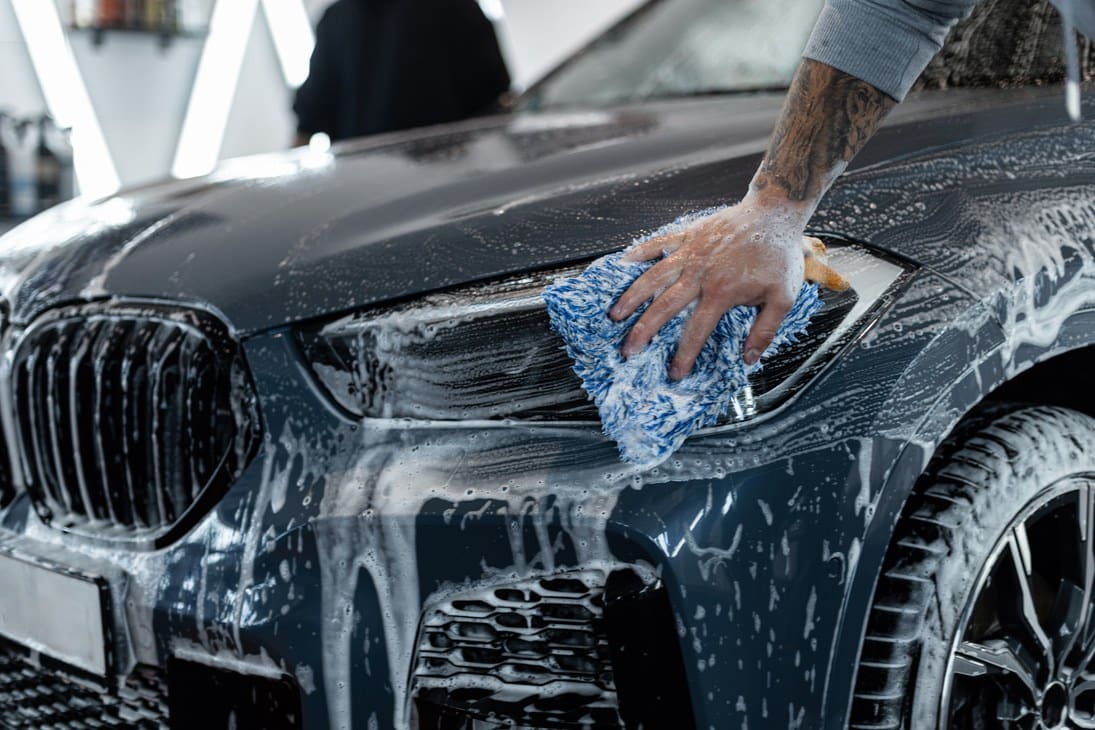
- Use a pH-neutral shampoo and clean microfibre mitts.
- Keep pressure-washer nozzles well away from film edges, and never aim directly at an edge.
- Avoid brush car washes and abrasive polishes or compounds.
- Dry the car rather than letting water evaporate in the sun, which leaves mineral spots.
Living with it
- Light scratches self-heal with heat. In summer, parking in the sun often does it. In winter, warm water helps.
- Remove bird droppings and sap promptly. The film protects the paint, but the film's own top coat looks best when it is kept clean.
- Inspect and wax periodically. The Maxguard care guidance recommends regular inspection and periodic waxing; checks also catch edge lift early.
What the warranty covers, and what voids it
The Maxguard PPF limited warranty covers manufacturing defects in professionally installed film: adhesive failure, bubbling, cracking, peeling, delamination, discoloration and yellowing.
It does not cover damage from impacts, accidents or scratches, film on repainted or aftermarket surfaces, or damage caused by misuse, abrasive cleaning or unauthorised installation. Improper maintenance can void it. Full terms are on the warranty page.
How to spot a poor installation
If you are comparing installers, these are the signs of rushed work: visible cut lines on the paint, film stopping short of panel edges where it could wrap, dust or hair trapped under the film, and stretch marks around curves. Ask to see a finished car under light before you book.